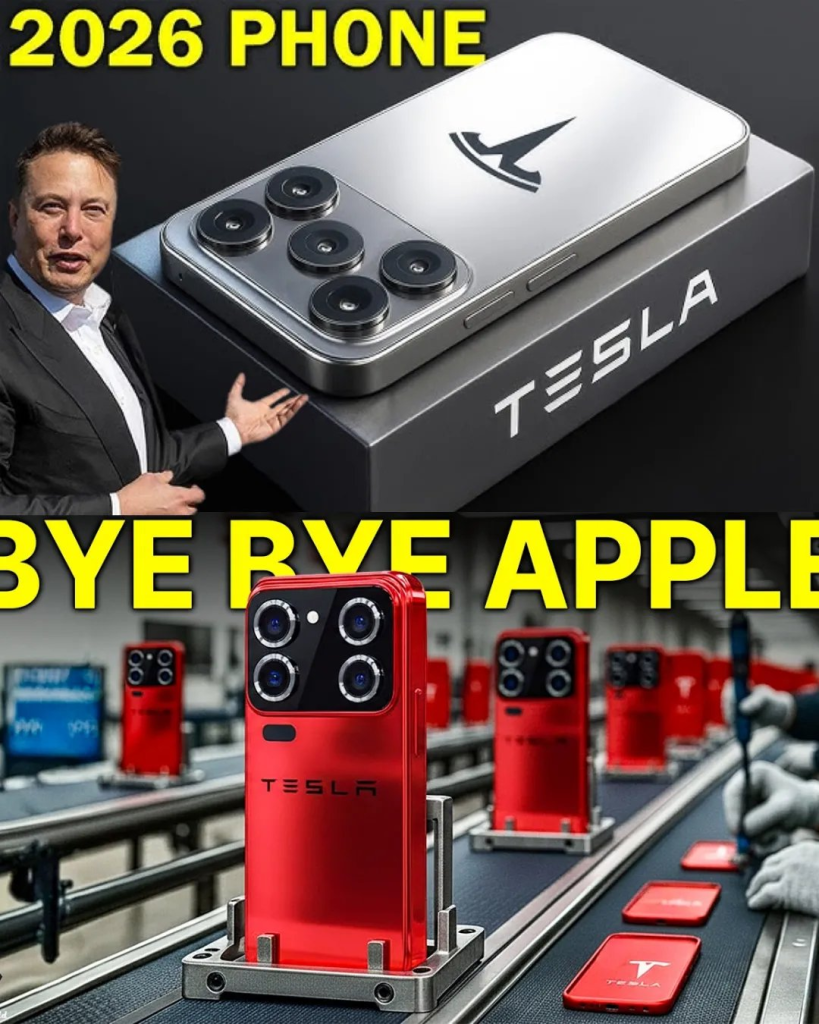
$789 Tesla Pi Phone Shocks Tech World, Threatens to Destroy Apple With Free Starlink Internet, Five Day Battery Life, XOS System, Titanium Body, And Elon Musk Vision Revealed Today Globally

The global technology industry jolted awake today as leaked specifications and insider confirmations ignited explosive discussion around the long rumored Tesla Pi Phone entering the consumer market unexpectedly.
Priced shockingly at seven hundred eighty nine dollars, the device immediately positioned itself as a direct existential threat to Apple, Samsung, and legacy smartphone dominance worldwide.
Industry analysts struggled to process early details, because the combination of Starlink connectivity, extreme battery endurance, and proprietary software suggested a philosophical shift, not merely another premium handset.
According to sources close to Tesla engineering teams, the Pi Phone is designed less like a smartphone and more like a portable infrastructure node integrated into Musk’s expanding ecosystem.
The most controversial feature remains free global Starlink internet access, bypassing traditional cellular carriers entirely, undermining decades of telecom power structures with a single consumer product launch.
Instead of contracts, towers, and roaming fees, users reportedly connect directly to low earth orbit satellites, creating uninterrupted global coverage even in deserts, oceans, or politically restricted regions.
Telecommunications executives privately admitted panic, fearing regulatory chaos as millions could abandon carrier plans overnight, triggering revenue collapses across industries long considered untouchable.
Battery performance further escalated disbelief, with internal testing allegedly demonstrating five full days of heavy usage without charging, a figure dismissed as impossible until now.
Engineers achieved this through custom energy optimization, solar assisted charging, graphene layered cells, and deep system level efficiency rarely pursued by traditional smartphone manufacturers.
Tesla’s experience with electric vehicles clearly influenced this design philosophy, prioritizing energy management over flashy yet power hungry gimmicks dominating existing smartphone lineups.
The Pi Phone reportedly runs XOS, a Tesla developed operating system built from the ground up rather than modified Android or iOS frameworks.
XOS integrates seamlessly with Tesla vehicles, neural networks, AI assistants, Starlink, and future robotics, forming a closed yet expandable technological ecosystem spanning devices, transportation, and space.
Early testers described XOS as minimalist, brutally efficient, and refreshingly transparent, removing cluttered interfaces, data harvesting permissions, and intrusive notifications common across mainstream platforms.

Privacy advocates cautiously welcomed the design, noting Tesla’s public stance against third party data exploitation, though skepticism remains until independent audits confirm real world behavior.
The phone’s exterior matches its internal ambition, featuring aerospace grade titanium housing, scratch resistant ceramic glass, and water resistance rated beyond consumer industry standards.
This material choice reduces weight while dramatically increasing durability, signaling Tesla’s intention to build tools rather than fashion accessories vulnerable to cosmetic damage.
Observers noted parallels to SpaceX rocket construction, where durability, modularity, and performance override aesthetic excess dominating luxury consumer electronics markets.
Inside the device, Tesla allegedly incorporated AI optimized silicon developed in collaboration with neural processing teams working on Full Self Driving technologies.
This allows advanced local AI processing without cloud dependency, enabling real time language translation, image analysis, navigation, and automation offline anywhere on Earth.
Such capability directly challenges Apple’s silicon leadership, forcing uncomfortable comparisons between proprietary chip architectures designed for vastly different strategic visions.
Elon Musk’s fingerprints appear unmistakably across the project, blending ideological disruption with engineering bravado, framing the Pi Phone as rebellion against corporate technological stagnation.
In internal presentations, Musk reportedly framed smartphones as obsolete platforms controlled by gatekeepers resisting innovation through controlled ecosystems and incremental annual upgrades.
The Pi Phone instead positions itself as a platform of freedom, decentralization, and vertical integration across industries Musk already influences deeply.
Apple insiders reportedly expressed concern, not over hardware specifications alone, but over narrative momentum that paints Cupertino as conservative while Tesla appears revolutionary.
Social media erupted within minutes of leaks, with hashtags trending globally as fans and critics debated whether Apple faced its first truly existential consumer threat.
Wall Street reacted swiftly, with telecom stocks dipping, satellite technology surging, and analysts scrambling to reassess valuation models tied to carrier dependent smartphone sales.
Regulators now face unprecedented challenges, as Starlink enabled phones raise questions about licensing, national sovereignty, emergency services, surveillance, and digital borders.
Governments reliant on telecom taxation may resist adoption, while remote communities could embrace connectivity previously unimaginable, reshaping economic participation worldwide.
Humanitarian organizations expressed cautious optimism, recognizing potential for disaster response, education, and healthcare access without infrastructure investment barriers.
Critics argue free satellite internet could overwhelm Starlink bandwidth, though SpaceX expansion plans reportedly account for massive consumer device integration.
Tesla’s pricing strategy stunned observers, undercutting flagship iPhones by hundreds while delivering features previously associated with premium experimental devices.
Some analysts speculate Tesla views the Pi Phone not primarily as profit center but as adoption gateway into its broader ecosystem.
If users rely on Tesla for connectivity, software, vehicles, energy, and AI, long term loyalty could eclipse traditional brand switching behaviors.
Apple’s walled garden model now faces competition from an entirely different philosophy, one prioritizing hardware sovereignty, decentralized access, and radical vertical integration.
The Pi Phone reportedly lacks app stores as currently understood, instead using modular web based applications verified through cryptographic trust systems.
Developers interact directly with users without platform taxation, threatening Apple’s lucrative thirty percent commission structure.
Such disruption alarms not only Apple but the entire app economy dependent on centralized marketplaces and enforced payment systems.

Consumer reactions remain polarized, with excitement tempered by skepticism regarding production scale, reliability, and long term support.
Tesla’s manufacturing capacity, though formidable in vehicles, must adapt to smartphone scale demands numbering tens of millions annually.
Supply chain insiders suggest Tesla leveraged SpaceX logistics experience to bypass bottlenecks plaguing traditional consumer electronics manufacturing.
Security experts analyze implications of satellite connected phones bypassing traditional lawful intercept frameworks used by governments globally.
Civil liberties advocates cautiously celebrate potential erosion of mass surveillance capabilities entrenched within carrier infrastructure.

Education sectors imagine students in remote regions accessing global knowledge instantly without connectivity barriers historically limiting opportunity.
Medical professionals envision telemedicine breakthroughs in isolated areas, enabled by persistent reliable connectivity independent of local infrastructure.
Environmentalists highlight reduced need for physical towers, cables, and infrastructure expansion, though satellite deployment environmental impact remains debated.
Apple executives reportedly convened emergency strategy sessions, evaluating responses ranging from accelerated satellite partnerships to regulatory lobbying efforts.
Samsung and Google face similar reckoning, as Tesla threatens to bypass Android ecosystems entirely rather than compete within existing frameworks.
The Pi Phone announcement reframes smartphones as infrastructure endpoints rather than lifestyle accessories, shifting expectations permanently.
Consumers now question why phones require daily charging, expensive data plans, fragile materials, and closed ecosystems restricting ownership.
Whether Tesla fulfills every promise remains uncertain, yet perception alone already altered competitive dynamics irreversibly.
Markets respond not only to products but to narratives, and Tesla’s narrative currently dominates attention, ambition, and imagination globally.
If even half the leaked specifications prove accurate, the Pi Phone represents not incremental evolution but systemic technological rebellion.
As preorders reportedly surge beyond expectations, one reality becomes undeniable: the smartphone industry’s status quo has been permanently destabilized.
Apple may survive, adapt, or retreat, but the era of uncontested smartphone dominance appears decisively over.
The Tesla Pi Phone does not merely enter the market; it challenges foundational assumptions about connectivity, power, and technological ownership worldwide.
And as Elon Musk’s vision unfolds, consumers now face a choice between polished familiarity and disruptive possibility unlike anything previously offered.