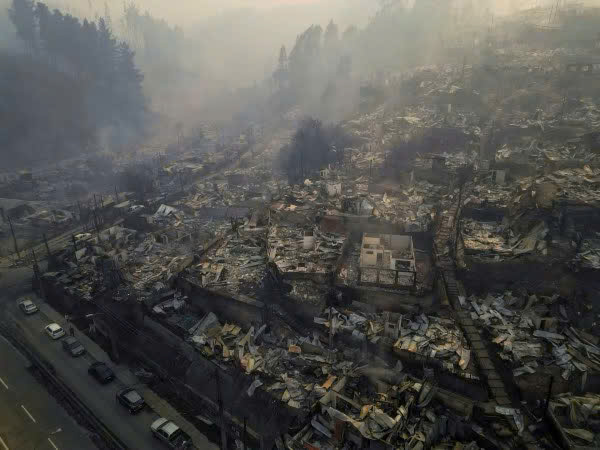
SANTIAGO, CHILE – A profound national tragedy is unfolding across the southern heartlands of Chile as “megafires,” fueled by a lethal combination of extreme heatwaves and prolonged drought, continue to incinerate entire townships. As of late February 2026, the Chilean government has confirmed a rising death toll and a displacement crisis that has reached historic proportions, marking this as one of the most devastating environmental disasters in the nation’s recent history.
What began as isolated forest fires in early January has escalated into an uncontrollable wall of flame, claiming at least 21 lives and leaving dozens more with severe injuries. With over 50,000 residents forced to abandon their homes and more than 2,300 structures reduced to ash, the regions of Bío Bío and Ñuble have become the epicenter of a desperate struggle for survival.
A Landscape in Ashes: The Scale of Destruction
The sheer scale of the disaster is difficult to comprehend. Satellite imagery and ground reports from the National Disaster Prevention and Response Service (SENAPRED) indicate that more than 45,000 hectares (approximately 111,000 acres) of forest and agricultural land have been scorched.
The human impact is most visible in the coastal and rural towns of the Bío Bío region. Towns such as Penco and Lirquén have borne the brunt of the firestorms. Witnesses describe scenes of “apocalyptic” intensity, where embers carried by high-velocity winds jumped highways and rivers, igniting residential blocks in minutes.
- Residential Losses: Current assessments confirm that 2,359 homes have been destroyed or sustained irreparable damage.
- Infrastructure: Power lines, water treatment plants, and telecommunications towers have been melted or toppled, leaving thousands of survivors in a “digital and utility blackout.”
- Agriculture: For a region that serves as Chile’s agricultural backbone, the loss of livestock and vineyards is catastrophic, threatening the livelihoods of thousands of small-scale farmers.
The “Perfect Storm”: Weather and Climate Change
Meteorologists point to a “triple threat” of environmental factors that have rendered traditional firefighting methods nearly ineffective. Since the start of 2026, Chile has been gripped by a scorching heatwave, with temperatures consistently exceeding 38°C (100.4°F) in the southern valleys—nearly 10 degrees above seasonal norms.
The Megadrought and “Puelche” Winds
Chile is currently grappling with a “megadrought” that has lasted over a decade, leaving the soil and vegetation tinder-dry. When the Puelche winds—hot, dry gusts blowing from the Andes toward the Pacific—intensified in February, they acted as a bellows for the flames. These winds not only spread the fire at speeds exceeding 60 km/h but also created “spot fires” miles ahead of the main fire front, trapping residents before evacuation orders could even be issued.
“We are no longer facing ‘natural’ fires in the traditional sense,” noted a climate scientist from the University of Chile. “We are seeing the manifestation of a permanent climate shift where the fire season starts earlier, lasts longer, and burns with a caloric intensity that can melt steel infrastructure.”
Government Action: Martial Law and the “State of Catastrophe”
In response to the escalating crisis, President Gabriel Boric has officially declared a State of Catastrophe in the Bío Bío and Ñuble regions. This move grants the military exceptional powers to manage logistics, enforce evacuations, and maintain public order.
Emergency Measures Implemented:
- Military Mobilization: Thousands of soldiers have been deployed to support the 24 active fire fronts, working alongside professional “Brigadistas” and volunteer firefighters (Bomberos).
- Nighttime Curfews: A strict curfew has been imposed in the hardest-hit zones from 10:00 PM to 5:00 AM. This measure aims to prevent looting in evacuated neighborhoods and to keep roads clear for emergency vehicles and heavy machinery.
- Investigation into Arson: While the weather provided the conditions, the cause of the fires is under intense scrutiny. Public prosecutors have confirmed the arrest of at least one suspect in the Araucanía region, accused of using accelerants to start a fire. President Boric has vowed that “the weight of the law will fall upon those who intentionally endanger our people.”
The Humanitarian Response: Solidarity Amidst the Smoke
Despite the tragedy, a massive wave of solidarity has swept across Chile. International organizations and local businesses are working in tandem to prevent a secondary health crisis.
The Connecting Business initiative (CBi), in partnership with local chambers of commerce, has mobilized supply chains to ensure that masks, water, and non-perishable food reach the 50,000 evacuees currently housed in temporary shelters and schools.
The Peril of the Rescuers
The toll on the frontline responders has been immense. Firefighters have been working 24-hour shifts in gear that offers little protection against the 38°C ambient heat plus the radiant heat of the fires. “We are fighting a monster that breathes fire and moves faster than a man can run,” said one volunteer in Bío Bío. The government has prioritized psychological support for these teams, many of whom have lost their own homes while out saving others.
Economic and Ecological Fallout
Beyond the immediate human cost, the 2026 fires represent a staggering economic blow to Chile. The forestry sector, a major pillar of the national GDP, has seen thousands of hectares of commercial pine and eucalyptus plantations destroyed.
Moreover, the ecological damage to native forests—home to endangered species like the Monito del monte and various endemic flora—is largely irreversible. The loss of canopy cover also raises fears of massive landslides and soil erosion when the autumn rains eventually arrive, potentially creating a secondary disaster cycle.
Looking Ahead: The Road to Reconstruction
By the final week of February 2026, there are flickers of hope. A slight drop in temperature and a shift in wind direction have allowed fire crews to contain several major fronts. However, officials warn that the danger is far from over.
“Recovery will not be measured in weeks, but in years,” President Boric stated during a visit to a shelter in Chillán. The government has announced an initial emergency relief package for families to rebuild, but the long-term challenge lies in Climate Adaptation.
Chile must now rethink its urban-forest interface. Recommendations from urban planners include:
- Mandatory Firebreaks: Establishing wide clearings between forests and residential areas.
- Water Infrastructure: Investing in high-capacity reservoirs specifically for aerial firefighting.
- Community Training: Enhancing local “Early Warning Systems” to ensure that the 50,000-person evacuations of 2026 do not become a yearly necessity.
Conclusion: A Global Call for Awareness
The tragedy in Chile is a sobering reminder of the vulnerability of our world to extreme weather. As we pray for the families who have lost loved ones and the rescuers still battling the flames, the international community must take note. What is happening in Bío Bío and Ñuble is a front-line battle in the global struggle against a changing climate.
For now, the smoke remains thick over southern Chile, but the spirit of Chilenidad—the legendary resilience of the Chilean people—remains unburnt. As the nation mourns its 21 fallen citizens, the focus turns toward the monumental task of rebuilding from the ashes.