It’s a quiet morning …You’re brushing your teeth, perhaps catching a glimpse of your reflection, when your eyes land on your own forearms or the back of your hands, your body. Winding across them is a complex, bulging network of what looks like blue and green rivers. They seem more prominent today than they did yesterday, like a roadmap you don’t remember buying.
A few decades ago, “bulging veins” were seen as a simple sign of old age or a “hard day’s work.” In the 1990s and 2000s, “vascularity” became a symbol of peak fitness, particularly in the bodybuilding world. As the world of “Bio-Hacking” and proactive health continues to merge, we are realizing that this complex vascularity isn’t just about appearance; it’s a dynamic real-time communication system from your cardiovascular system.
Your veins are trying to talk to you. They are signaling your hydration levels, your stress response, and even the efficiency of your internal “plumbing.” The “little-known” reasons behind your big veins, what they mean and the “Nana Rule” for knowing when a map is actually a warning.
1. The Anatomy of the Bulge: Not All Veins are Equal
Before we can decode the map, we have to understand the different types of veins that we can see.
The Superficial Veins: These are the big ones we can see just below the skin’s surface. They are the primary way blood returns to the heart. When they look prominent, it usually just means they are working exactly as they should.
The “Lace” Veins (Varicose and Spider Veins): These are different. They are often purple, twisted, and seem to “lace” across the skin. In 2026, we focus on the “pumping efficiency” of these veins. If they are bulging, it’s a sign that the tiny one-way valves inside them aren’t working, causing blood to pool.
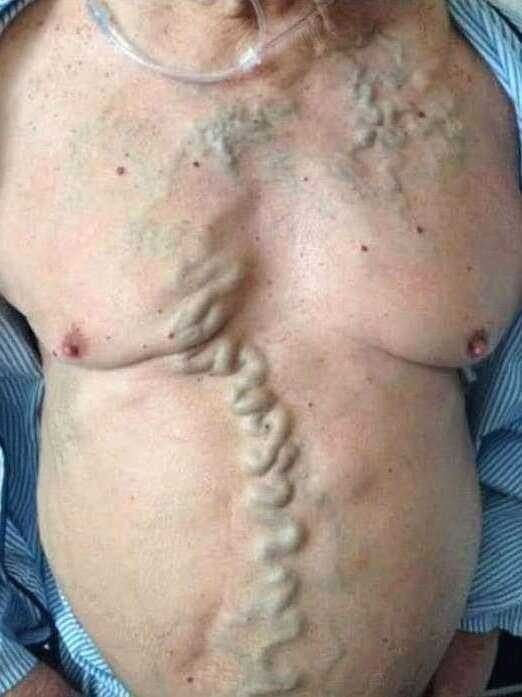
The “Bio-Hacked” Vein: we know that people who intentionally reduce their body fat below a certain percentage (around 10-12% for men and 18-20% for women) will have naturally higher vascularity. It’s not necessarily healthier; it’s just a byproduct of that lower adipose tissue layer.
2. Beyond Aging and Exercise
Aging and a good gym session are the classic reasons for bulging veins, but in 2026, we look at the other major players.
The Blood Pressure “Echo”: Chronic, undiagnosed high blood pressure can subtly stress your veins. When the pressure is too high for too long, your superficial veins widen to handle the load, making them more visible.
The “Stress” Flush: When you are under chronic stress, your body releases a cascade of cortisol and adrenaline. This can constrict smaller arteries and shift blood toward the large surface veins as your “fight or flight” response prepares for action. This can make them bulge, but it also increases vascular strain.
The “Hydration” Illusion: This is the most “little-known” one. Dehydration actually makes your veins less prominent, not more. In 2026, we know that optimal vascularity requires proper fluid levels. If your veins seem smaller, it’s a sign you need water, not that you are “healthy.”
3. Knowing When to Worry: “No-Go” Signals
So, your veins are big. Should you call the doctor? In 2026, we have a clear set of “No-Go” signals that demand attention.
Pain, Heat, and Redness: If a specific vein is bulging and feels tender, hot, or has a clear red streak following it, that is Phlebitis (vein inflammation). It requires immediate medical care.
Swelling in One Limb: A bulging vein accompanied by sudden, new swelling in just one leg or arm is a “Red Flag” for Deep Vein Thrombosis (DVT)—a blood clot that can become life-threatening if it travels to the lungs.
The “Hard Cord”: If a visible vein feels rigid and hard to the touch, like a cord, it could be a Superficial Clot or severe scarring.
Sudden Bleeding: If a varicose vein (even a small one) begins to bleed after a minor injury, it means the skin over the vein has become dangerously thin and requires treatment.
4. The Proactive Protocol: Tending to the Map
If your big veins pass the “No-Go” test, they are likely just a normal sign of a working body. But you can still tend to them in 2026:
The Compression Standard: We don’t just use compression stockings for flights anymore. Many people with visible leg veins use light compression (15-20 mmHg) during work days to support the one-way valves.
The “Elevate” Rule: The best “natural cure” for leg veins in 2026 is simple gravity. Spend 15 minutes a day with your legs above your heart to let the blood “drain” with zero effort.
The Movement Mandate: In an era of remote work, we must fight the “stagnant blood.” Standing up and flexing your calf muscles every 30 minutes acts as a “calf muscle pump,” actively pushing blood back up to your heart.
5. Nana’s Wisdom: “Don’t Mind the Map; Mind the Engine”
Nana lived through a time when “bulging veins” were just part of being a parent, a grandparent, and a gardener. She had a very specific way of looking at what she called the “Blueprint” under the skin.
She used to tell us, “A river doesn’t care if you’re looking at it; it just wants to get to the sea. You stop worrying about those blue lines on your hands. Those are the lines that carry the love. You stop looking at the map and start listening to the engine. If your heart is strong, and your pace is steady, and you can still climb those stairs without taking a breath, your veins are just fine.” She believed that the “bulge” was just the body’s way of showing off its hard work.
She’d see that viral post about the consequences of sleeping and say, “You’re looking for problems where you should be seeing the miracle. That isn’t consequences of sleeping; that’s consequences of being a person who worked hard for seventy years. You don’t try to rub those lines away; you wear them like a badge of honor. As long as they aren’t hurting, they are your best friends. They are the proof that you are still here, and you are still moving.” Nana had a rule: The “Fingernail” Rule. She’d say, “If you can gentle-push your fingernail over the line and the blood comes right back when you lift it, the ‘river’ is honest. If it stays white, you go see the man with the white coat.” Nana knew that in 2026, the real “vascularity” was resilience, not a selfie.
The Takeaway: Honor the Blueprint
Those big veins on your skin are more than a cosmetic concern or a fitness goal. They are recognized as the complex, real-time feedback system of your cardiovascular health. By honoring the blueprint, knowing the “No-Go” signals, and listening to Nana’s advice, you can stop worrying about the map and start celebrating the life it sustains.
Are your big veins a source of pride or worry for you? Have you ever noticed them “flushing” during a stressful moment or after a long day of work?