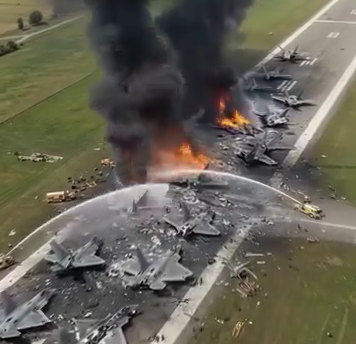
This aerial footage shows a catastrophic scene at an airport runway where several fighter jets have been severely damaged or destroyed in a large-scale fire. Thick, black smoke billows into the sky from multiple locations along the tarmac, signaling the intensity of the ongoing blaze. Firefighting crews are on the scene, actively spraying water onto the burning wreckage in an attempt to suppress the fire. The aircraft, which appear to be F-22 Raptors, are scattered and broken, indicating a major incident rather than a single accident. Emergency vehicles, including fire trucks, are positioned around the disaster area, highlighting the massive scale of the response effort. The runway itself is littered with debris from the damaged jets, creating a chaotic and dangerous environment for the ground crews. The lush green grass bordering the runway contrasts starkly with the dark, industrial destruction unfolding on the concrete. Other fighter jets that appear relatively intact remain parked along the runway, some distance away from the primary fire zones. The aerial perspective provides a clear view of the devastation, emphasizing the magnitude of the loss. The smoke is so dense that it partially obscures sections of the runway and the surrounding airfield. The fire appears to be moving from one section of the parked aircraft to another, necessitating a rapid and coordinated response. Firefighting hoses are deployed across the tarmac, showing the strategic approach of the rescue teams. The scene is reminiscent of a high-stakes emergency drill or a major military catastrophe. The sheer number of aircraft involved makes the event appear unprecedented in its impact. The lack of movement from the fire trucks suggests they are operating in a fixed, defensive position to contain the flames. The structural damage to the aircraft is extensive, with wings and fuselage sections appearing mangled or melted. The clear, bright sky above indicates that the event is happening during favorable weather conditions. The footage serves as a sober reminder of the risks inherent in maintaining large fleets of advanced military hardware. The scale of the destruction suggests that the recovery and investigation process will be long and complex. Each fighter jet, once a powerful instrument of air superiority, now lies in ruin, consumed by fire. The persistence of the fire despite the firefighters’ efforts indicates the presence of volatile fuel or specialized materials. The wide-angle shot captures the entire length of the affected runway, allowing the viewer to grasp the full extent of the incident. Smoke trails and fire plumes create a dramatic and haunting visual landscape. The ground crews must navigate through a scene filled with potential hazards to combat the fire effectively. This event underscores the vulnerability of even the most sophisticated defense assets when concentrated in a single location. The images evoke a strong emotional reaction due to the clear loss of significant military infrastructure. The orderly arrangement of the remaining aircraft contrasts with the chaotic disarray of those on fire. The rescue teams’ commitment is evident as they continue to fight the blaze in such extreme conditions. Every frame of this footage tells a story of sudden crisis and heroic response. The video is a testament to the raw power of fire and the difficulty of containing such industrial-scale disasters. The sight of multiple jets in flames is rare and draws immediate attention to the severity of the situation. The airfield layout seems to have been designed for logistical efficiency, but today it is the center of a major incident. The surrounding landscape remains largely unaffected, highlighting the containment of the incident to the runway itself. The visual record provided by the footage is invaluable for future safety analysis and incident review. Despite the destruction, the emergency response appears disciplined and methodical. The contrast between the cold, metallic surfaces of the jets and the intense, orange flames is a striking visual element. The video does not provide a narrative, but the visuals are self-explanatory and powerful. The entire scene captures a moment that will undoubtedly be studied for its implications on ground safety and fire prevention. The scale of the fire makes it visible from a considerable distance, highlighting the urgency of the situation. As the video concludes, the fire continues to burn, marking an ongoing crisis that demands full attention. The footage is a stark reminder of the unpredictable nature of operational aviation. Every detail, from the color of the smoke to the placement of the fire trucks, adds to the gravity of the events unfolding on the tarmac. The viewer is left with a deep impression of the speed with which such a scene can develop. The lack of audio serves to amplify the visual intensity of the fire and the desperation of the response. The incident highlights the critical need for constant vigilance and robust fire suppression systems at all times. The aftermath of this event will likely lead to significant changes in military protocols for the storage and maintenance of fighter jets. The video remains a permanent record of a challenging and costly day for the military unit involved. The footage ends, but the memory of such a disaster will persist long after the flames have been extinguished.