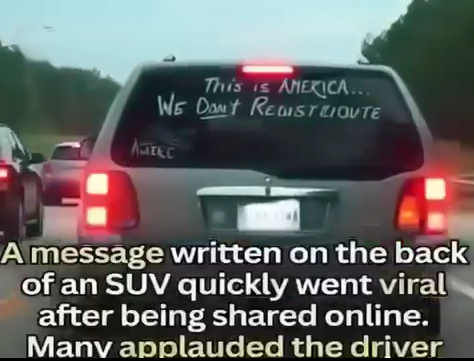
The video displays a silver SUV driving on a highway, featuring a hand-written message on its rear window that reads, “This is America… We DON’T REGISTRIOUTE”. Below this text, the word “AMERC” is also written on the glass. The vehicle is captured from the perspective of another driver directly behind it in traffic. As the SUV travels, its brake lights intermittently illuminate. The scene is set during daylight, with trees lining the sides of the road, suggesting a suburban or rural highway environment. The video includes overlaid text stating that the message on the SUV went viral after being shared online and that many people applauded the driver. This text remains consistent throughout the duration of the clip. The overall visual is a simple, candid shot of a vehicle in everyday traffic. The handwriting on the window appears to be done with a white marker or paint pen. The quality of the footage is typical of a smartphone recording from inside another moving car. Other vehicles, including a dark car to the left, are visible in the surrounding lanes. The footage provides no additional context or interaction between the drivers. The focus remains entirely on the rear of the SUV and the message displayed. The video is very short, capturing only a brief moment of the vehicle’s commute. It serves as a brief visual record of a piece of viral content. The movement of the SUV is steady, reflecting normal highway speeds. The scene offers a glimpse into how social or political expressions are sometimes displayed on personal vehicles. No pedestrians or other notable landmarks are visible in the frame. The lighting is consistent, providing a clear view of the text. The framing keeps the SUV centered in the middle of the screen. The video does not contain any audio, leaving the focus solely on the visual message. This brief sequence captures a snapshot of a moment that gained public attention on social platforms. The simplicity of the recording style is characteristic of viral internet clips. The SUV’s license plate is visible but blurred, keeping the identity of the driver private. The message reflects a strong, personal stance that sparked reactions from viewers. The entire experience of watching this is a direct observation of a common sight on public roads. The video concludes without any change in the situation, remaining a static view of the SUV in traffic. Every aspect of the video highlights the ease with which such messages can be captured and spread online. It stands as a straightforward, unfiltered piece of digital documentation. The scene highlights how a single image can quickly become a subject of online discussion. No further action or development occurs as the clip reaches its end. The viewer is left to observe the message and the context provided by the overlaid text. The video is a testament to the power of social media to amplify everyday moments. The visual contrast between the white text and the dark window makes the message easy to read. The highway setting adds a sense of reality to the footage. The interaction between the viewer and the video is focused and immediate. Every detail, from the brake light activation to the surrounding traffic, creates a cohesive scene. The video effectively communicates the nature of the viral content without needing extra narrative. The brevity of the clip ensures that the message is the only thing the viewer remembers. It captures the essence of a modern, digitally-driven moment. The scene is unremarkable in its setting but notable for the message it carries. The overall presentation is clean and direct. The viewer can easily grasp the situation within the first few seconds of watching. The video provides a clear example of how public expressions are documented in the digital age. It is an unedited look at a common, if unusual, sight on the road. The footage serves as a simple, effective piece of evidence for the claim made in the text. The final moments of the video show the SUV continuing to drive away, signaling the end of the observation.