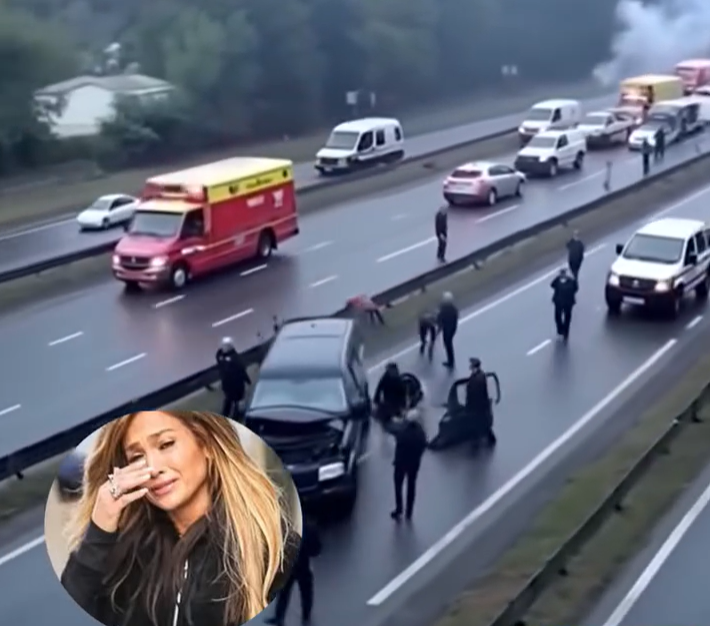
This video displays an aerial view of a busy highway during what appears to be an incident-related traffic stoppage. Several emergency response vehicles and personnel are visible near a stopped black van, which has its hood open. The surrounding lanes are filled with numerous vehicles, suggesting a significant traffic disruption. An inset in the bottom left corner displays a woman who appears to be crying. A graphic in the bottom right corner invites viewers to read the “FULL STORY BELOW.” The footage provides a clear perspective of the emergency response operation and its impact on traffic flow. The presence of multiple emergency responders and vehicles indicates the serious nature of the situation. The scene remains static and focused, allowing for detailed observation of the highway and the activity within. The atmosphere is urgent, reflecting the nature of such emergency responses on a public roadway. The visual account is direct and unfiltered, showing the reality of an incident on a major thoroughfare. The contrast between the stationary emergency vehicles and the surrounding stopped traffic creates a stark visual impact. The inclusion of the crying woman adds an emotional layer to the otherwise logistical reporting of the scene. The video captures the event without any external narration, allowing the visuals to speak for themselves. The entire sequence is a testament to the power of visual storytelling in documenting such events. The brevity of the encounter ensures that the viewer’s attention is captured and maintained, leaving a clear and lasting impression of the reported incident. The video remains a striking and direct record, allowing for a clear understanding of the situation as reported. Each detail contributes to the overall effect of a professionally managed and significant news report. The video serves as a compelling and concise narrative that speaks volumes about the gravity of the highway incident. The entire sequence, from start to finish, is a testament to the power of visual media in documenting such events. The video remains focused, clear, and professional throughout its duration. It is an effective example of how visual media can convey the seriousness of a developing story. This short, impactful video serves as a record of a highly charged and significant moment. The video provides a clear, unadorned glimpse into the mechanics of news dissemination during high-profile events. It is an effective way to communicate the gravity of the situation to the audience. The video effectively captures the formal and controlled atmosphere typical of official emergency responses. The absence of audio adds to the serious tone of the announcement. The video is a direct, albeit brief, record of a public and significant incident. The framing of the video, which includes the main highway scene and the inset, gives context to the situation. The contrast between the operational setting and the dramatic nature of the event adds to the impact of the scene. Every detail, from the attire of those involved to the expressions on their faces, paints a picture of a serious and urgent event. The lack of any resolution to the scene only adds to the intrigue, leaving the viewer to wonder about the context and the potential repercussions of the incident. This short, impactful video serves as a record of a highly charged and significant moment. The entire sequence is a testament to the power of visual storytelling in documenting such unexpected events. The video remains a striking and direct record, allowing for a clear understanding of the interaction. It is an effective example of how visual media can document and capture the essence of a situation without the need for additional context or narrative. The video concludes, leaving the viewer to reflect on the nature of the event and the implications of the incident.