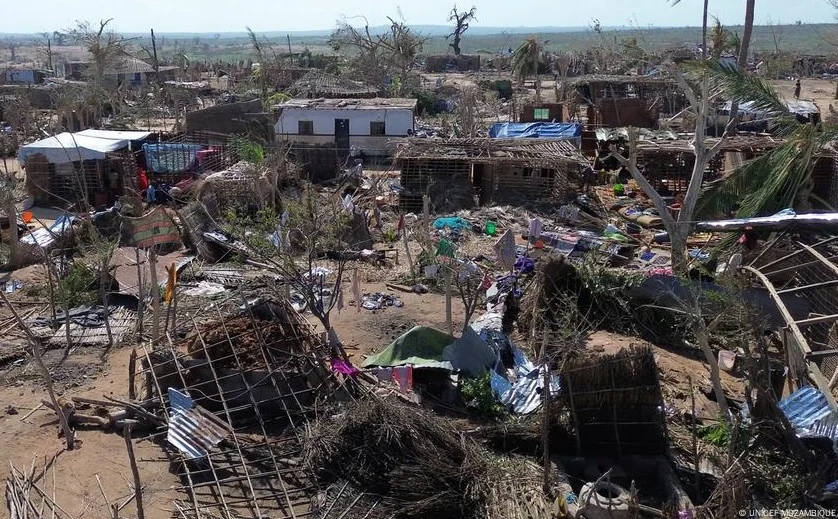
Humanitarian Crisis in Mozambique: Hundreds of Thousands Displaced as Relentless Floods and Cyclones Batter the Nation
MAPUTO, MOZAMBIQUE – In the opening weeks of 2026, the Republic of Mozambique finds itself grappling with a humanitarian catastrophe of staggering proportions. A relentless succession of tropical depressions and high-intensity cyclones has unleashed a deluge across the Southern and Central provinces, leaving a trail of destruction that has overwhelmed local infrastructure and triggered a massive international relief effort.
According to the latest situational reports from the National Institute for Disaster Management (INGD) and various United Nations agencies, the scale of the crisis is rapidly expanding, with current estimates suggesting that between 600,000 and 800,000 people have been directly affected by the rising waters.
A Nation Under Water: The Geographic Scope of the Disaster
The crisis, which began in early January 2026, has hit the provinces of Maputo and Gaza with particular severity. What started as seasonal rainfall quickly escalated into a national emergency as a series of low-pressure systems stalled over the Mozambique Channel, funneling unprecedented volumes of water into the Limpopo and Incomati river basins.
In the capital city, Maputo, and its surrounding peripheral districts, urban drainage systems—already strained by rapid population growth—collapsed under the pressure. Entire neighborhoods have been transformed into stagnant lakes, with water levels reaching rooftops in some low-lying areas. In Gaza province, the agricultural heartland of the south, the situation is even more dire. Vast tracts of farmland, essential for the country’s food security, are now submerged, raising the specter of a long-term economic downturn.
The Human Toll and Infrastructure Collapse
The physical toll of the flooding is visible in every corner of the affected regions. The INGD has confirmed that more than 30,000 homes have been either completely destroyed or severely damaged. This has left tens of thousands of families without shelter, forcing them to seek refuge in overcrowded temporary transit centers or on higher ground, often in precarious conditions.
The destruction extends far beyond residential property:
- Isolation: Dozens of communities are currently “marooned,” effectively turned into islands by the floodwaters. Access to these areas is impossible by road, leaving residents dependent on high-risk boat crossings or sporadic helicopter drops for survival.
- Connectivity: Major arterial roads, including sections of the EN1 highway which links the north and south of the country, have been washed away or submerged, paralyzing trade and the movement of emergency supplies.
- Utilities: The national power grid has suffered significant damage. Substations in flooded zones have been decommissioned to prevent electrical hazards, leaving hundreds of thousands in total darkness. Communication towers have also been toppled, creating “black holes” where information regarding the needs of survivors is scarce.
The Role of Climate Change: A “New Normal” for Southeast Africa
Meteorologists and climate scientists point to a disturbing pattern emerging in the Southwest Indian Ocean. The 2026 flood crisis is not viewed as an isolated “freak” event but rather as a symptom of a warming planet.
“We are seeing a clear intensification of the hydrological cycle,” says Dr. Elena Mendes, a regional climate researcher. “The Mozambique Channel is warmer than historical averages, providing the thermal energy required for tropical depressions to rapidly intensify. What would have been a standard rainy season a decade ago is now a catastrophic sequence of events.”
The phenomenon of “back-to-back” storms—where the ground is already saturated by one system before the next arrives—has eliminated the soil’s ability to absorb moisture, leading to instant runoff and flash flooding. This environmental volatility makes long-term urban planning and disaster mitigation increasingly difficult for the Mozambican government.
The Silent Threat: A Looming Public Health Emergency
While the immediate danger of drowning is the most visible threat, humanitarian organizations are sounding the alarm over a secondary, perhaps more lethal, crisis: waterborne diseases.
The flooding has led to the widespread contamination of primary water sources. Latrines and sewage systems have overflowed, mixing waste with the standing water that survivors must navigate daily. UNICEF Mozambique has highlighted an “extreme risk” of a massive cholera outbreak, a disease that has historically plagued the region following natural disasters.
“Children are the most vulnerable in this environment,” a UNICEF spokesperson stated during an emergency briefing in Maputo. “Without access to clean drinking water and functional sanitation, we are racing against the clock to prevent a surge in diarrheal diseases and malaria, as the stagnant water provides a perfect breeding ground for mosquitoes.”
Emergency health kits, including water purification tablets and oral rehydration salts, are being prioritized, but the logistical bottlenecks caused by destroyed roads are hindering the “last-mile” delivery of these life-saving supplies.
The International Response: A Race Against Time
The global community has begun to mobilize, though the sheer scale of the need remains daunting. The World Food Programme (WFP) has activated its emergency protocols, aiming to provide food assistance to at least 500,000 people in the coming weeks.
Relief Efforts at a Glance:
- World Food Programme (WFP): Deploying high-energy biscuits and cereal stocks via heavy-lift helicopters to isolated regions.
- The International Federation of Red Cross (IFRC): Working alongside the Mozambique Red Cross (CVM) to manage temporary shelters and provide basic medical care and psychological support to traumatized survivors.
- UNICEF: Setting up “Child-Friendly Spaces” in displacement camps and repairing damaged school infrastructure to ensure some level of normalcy for the youth.
Despite these efforts, the funding gap remains significant. The Mozambican government has appealed for international solidarity, noting that the national contingency fund is insufficient to handle a disaster of this magnitude.
The Path to Recovery: Long-term Challenges
As the rain begins to subside in some areas, the true cost of the 2026 floods will become apparent. Mozambique faces a multi-year recovery process that will require billions in investment.
Economic Impact: The agricultural sector has taken a devastating hit. For a country where a majority of the population relies on subsistence farming, the loss of the 2026 harvest could lead to a protracted period of food insecurity and inflation.
Resilient Infrastructure: There is a growing consensus that “building back better” is the only viable path forward. This includes constructing flood-resistant housing, elevating critical infrastructure, and implementing more sophisticated early-warning systems that can reach the most remote villages.
Conclusion: A Call for Global Awareness
The crisis in Mozambique is a stark reminder of the vulnerability of developing nations to extreme weather events. While the headlines may fade as the waters recede, the struggle for the 800,000 people affected is only just beginning. The international community must remain engaged, not only in providing immediate relief but also in supporting the long-term resilience of a nation that finds itself on the front lines of the global climate crisis.
As the sun sets over the flooded plains of Gaza province, the resilience of the Mozambican people remains their greatest asset. However, resilience alone cannot rebuild thirty thousand homes or stop the spread of cholera. It requires a concerted, well-funded, and compassionate global response.