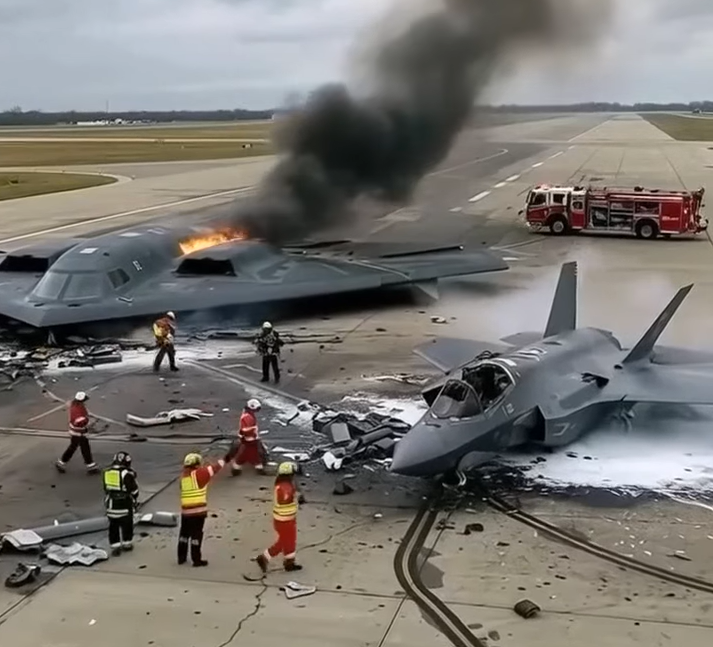
The footage depicts a serious emergency on an airfield where a B-2 Spirit bomber is visibly burning, with thick, dark smoke billowing from the top of the aircraft. In the foreground, a heavily damaged fighter jet rests on the runway, surrounded by a significant amount of scattered debris. Multiple emergency responders dressed in high-visibility uniforms are on the tarmac, actively managing the scene and coordinating around the wreckage. A red fire truck is positioned nearby, ready to assist with the ongoing efforts to contain the blaze. The ground near the fighter jet is covered in white fire-suppression foam, indicating a prior or ongoing attempt to extinguish the flames. The surrounding airport landscape appears vast and open, emphasizing the isolation of the incident on the runway. The scene is captured during daylight, which provides clear visibility of the destruction and the response teams. The contrast between the intense, orange flames on the bomber and the grey, mangled structure of the fighter jet highlights the severity of the dual-threat situation. Responders move with urgency, but their movements are methodical, reflecting the dangers of working near burning military aircraft. The B-2 bomber remains largely intact in shape, though the fire is consuming the central upper portion of its wing structure. The fighter jet, by contrast, appears to have suffered a more structural, catastrophic failure, as much of its fuselage is broken and spread across the pavement. The entire scene serves as a stark, sobering document of a significant aviation disaster. The footage is recorded from an elevated perspective, offering a comprehensive view of the entire impact zone. There is no audio in the video, leaving the viewer to focus entirely on the dramatic visuals of the fire and the emergency response. The presence of debris across a wide area suggests a high-energy event occurred prior to the arrival of the ground crews. Each individual involved in the response is focused on their specific task, ensuring the safety of the area while attempting to mitigate the fire. The airport tarmac is marked with runway lines, providing a clear reference for the scale of the wreckage. The video captures a moment of intense crisis where professional responders are tested by a complex, multi-vehicle emergency. The lack of movement from other aircraft in the background suggests a controlled and secure perimeter has been established. This footage is a powerful example of how quickly and dramatically an airfield can become the site of a critical situation. The clarity of the video allows for a detailed observation of the fire’s behavior and the damage to the aircraft involved. The scene remains contained within the camera’s frame, providing a clear focus on the emergency at hand. The viewer is left with a profound sense of the risks involved in military aviation and the importance of rapid, specialized response capabilities. As the video progresses, the smoke continues to rise steadily, suggesting the fire is not yet fully under control. The entire sequence is a brief but impactful snapshot of a moment that will likely be studied for safety and procedural improvements. The professional conduct of the emergency team is evident in their organized approach to the volatile environment. The video does not provide a narrative, but the visuals are self-explanatory regarding the gravity of the incident. Every frame adds to the tension of the scene as the responders continue their work. The footage stands as a permanent, direct record of the event, serving as a reminder of the fragility of even the most advanced machinery. No other people are visible on the runway besides the responders, emphasizing the exclusion zone established for safety. The visual intensity of the fire against the overcast sky creates a haunting image. The debris patterns suggest the violent nature of the incident that caused this damage. The video concludes without further developments, leaving the viewer to contemplate the aftermath. It is a rare glimpse into the immediate consequences of a major aviation failure on the ground. The camera’s steady position is optimal for documenting the event from a safe distance. Each passing second reinforces the magnitude of the disaster. The entire experience of watching this is one of alertness and concern for the personnel involved. The video is a testament to the risks associated with operating such high-value assets on an airfield. The clarity of the image ensures that every detail of the wreckage is clearly visible. The sight of the burning bomber serves as a clear warning about the hazards involved in these operations. The teamwork displayed by the responders is a highlight of the footage. The video effectively uses the tarmac to frame the incident, keeping the viewer’s focus on the center of the disaster. There is a sense of suspended time as the viewer watches the fire burn unchecked. The red fire truck’s position provides a sense of the scale of the operation. The video serves as a reminder of the vital importance of safety protocols for all aviation activities. The visual density of the smoke is a particularly striking feature of the clip. The footage is a straightforward and unflinching look at an unfortunate and costly event. It is a rare, raw glimpse into the aftermath of a major military accident before full recovery efforts are completed. The scene is evocative, leaving a lasting impression on anyone viewing it. The camera’s positioning is effective, providing a comprehensive view of the event. The airfield surroundings provide a grounded context to the modern, industrial disaster taking place. Each passing second in the video reinforces the power of the fire. The entire experience of watching this is one of alertness and professional concern for the emergency response teams. The video ends, leaving the viewer to imagine the necessary response that must follow this critical moment.