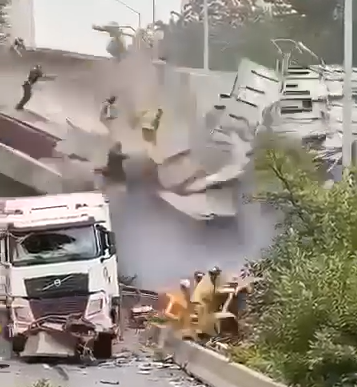
The provided footage depicts a harrowing scene at an overpass where a major structural failure has occurred, leaving a significant portion of the concrete infrastructure dangling precariously above a busy thoroughfare. A large white semi-truck is positioned directly on the roadway underneath the compromised bridge section, serving as a focal point of the danger. Numerous emergency response personnel, including firefighters in high-visibility gear, are actively present at the site, attempting to assess the catastrophic damage. Suddenly and violently, the unstable concrete section gives way, crashing down onto the road with immense force and sending a massive plume of dust and debris into the air. This dramatic event forces nearby vehicles to abruptly navigate the sudden hazardous obstruction, while rescue workers scramble to react to the unfolding disaster. The incident takes place during daylight hours, ensuring that the visual impact of the falling concrete and the chaotic aftermath are captured with striking clarity. The composition of the footage includes both a primary, detailed view of the failing structure and an inset frame that provides a broader perspective of the surrounding traffic and the extensive rescue operations. Dust quickly blankets the area, obscuring parts of the road and creating a tense atmosphere of urgency and alarm. The video serves as a powerful, unfiltered document of a critical infrastructure breakdown, highlighting the extreme risks posed by such structural instabilities. Each frame emphasizes the sudden and unpredictable nature of the collapse, leaving little time for those on the ground to escape the path of the debris. The juxtaposition of the two camera angles allows the viewer to observe both the specific failure of the column and the wider impact on the highway environment. The scene is devoid of any audio, yet the visual spectacle of the crashing overpass is overwhelming and conveys the intensity of the emergency without needing narration. The steady, fixed nature of the surveillance recording ensures that every moment of the collapse is preserved for analysis. It is a sobering reminder of the vital importance of maintaining safe and sound public infrastructure to prevent such disasters from occurring. The entire sequence is captured from a high-angle, providing an optimal vantage point to witness the progression of the failure. As the debris settles, the extent of the damage becomes increasingly apparent, revealing the scale of the reconstruction that will be necessary. The presence of the emergency crews in such close proximity to the collapse zone underscores the high-stakes environment in which they are forced to operate. No civilians are clearly identifiable in the immediate vicinity of the falling structure, which suggests that the area may have been partially cleared or that the collapse was sudden enough to catch everyone off guard. The video remains a stark testament to the raw energy released during such structural failures. The surrounding landscape and vegetation provide a calm, contrast-filled backdrop to the modern, industrial disaster taking place. Every passing second of the recording reinforces the power of the concrete as it crumbles and hits the road surface below. The viewer is left with a deep sense of concern for the safety of all those who were near the overpass during this critical moment. This footage is a valuable, albeit disturbing, resource for understanding how infrastructure collapses unfold in real-time. The clarity of the imagery ensures that the severity of the incident is unmistakable to anyone viewing the clip. The lack of any preceding warning signs adds to the shock factor of the sudden collapse. The entire experience of watching this is one of alertness, as the viewer waits for the moment when the structure eventually gives way. The video ends without showing the complete resolution of the emergency, leaving the viewer to imagine the arduous recovery efforts that must follow. It serves as an evocative snapshot of a moment that will likely define the history of this roadway and its maintenance protocols. The final moments of the video show the dust lingering over the road, a haunting reminder of the massive weight that just plummeted from above. The footage remains professional and direct, presenting the facts of the event without any unnecessary dramatic embellishments. It is a brief but impactful piece of visual storytelling that captures the essence of a modern urban crisis. The absence of movement in the final frames suggests that the scene has entered a stabilization phase following the initial collapse. Every detail, from the position of the trucks to the layout of the overpass, is rendered with absolute clarity. The video is a powerful example of how surveillance technology can provide critical documentation for public safety events. It stands as an important record of an unfortunate incident, capturing a moment that was clearly unexpected. The visual intensity of the scene is bolstered by the high resolution of the recording, making the debris and dust appear incredibly vivid. The entire sequence is a masterclass in how to capture a disaster from a safe and stationary position. The viewer is left to process the implications of the structural failure on both the transportation system and the surrounding community. This video will undoubtedly remain an important visual aid for those studying engineering failures and emergency management strategies. It is a raw, unflinching look at the unpredictability of the built environment. As the recording concludes, the viewer is left with a profound appreciation for the dangers inherent in our daily commute. The footage is a testament to the speed with which a routine day can turn into a critical emergency. The lasting impression is one of vulnerability, as the viewers are forced to consider the strength and stability of the infrastructure they rely on every day.