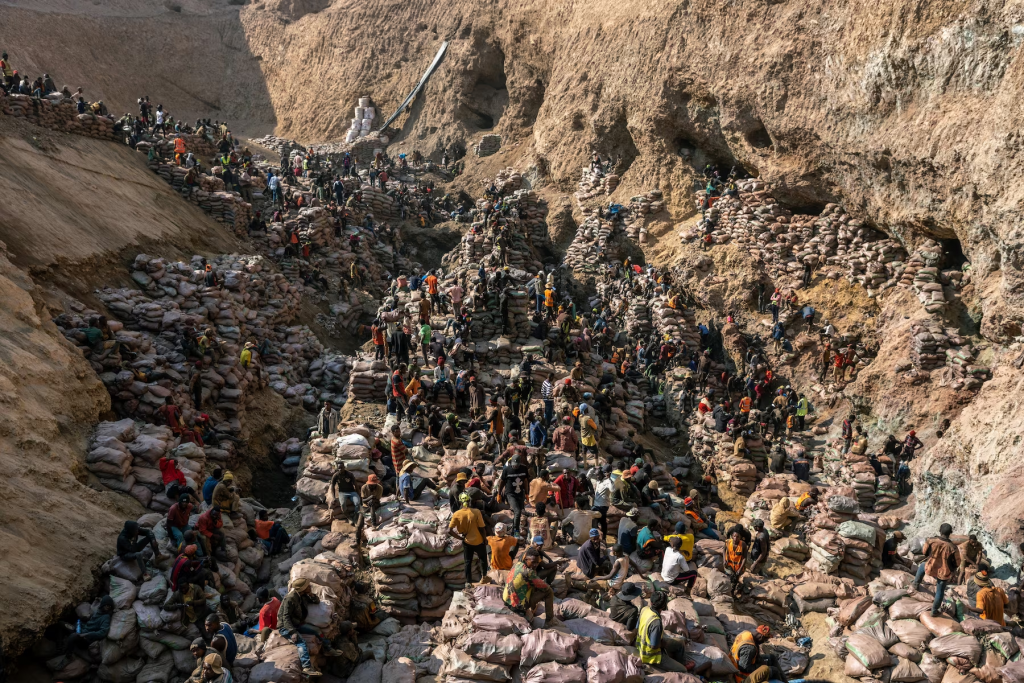
RUBAYA, NORTH KIVU – In what is being described as one of the deadliest industrial disasters in the history of the Democratic Republic of Congo (DRC), a massive landslide at the Rubaya coltan mines has claimed the lives of more than 400 people. The tragedy, which unfolded on January 28 and 29, 2026, has once again cast a dark shadow over the global electronics supply chain, highlighting the brutal reality of artisanal mining in conflict-stricken regions.
A Hillside Engulfed by Mud
Following days of unrelenting heavy rainfall, the fragile, rain-soaked earth of the Luwowo mining site finally gave way. Two successive landslides struck the area, burying several hand-dug artisanal tunnels where hundreds of miners were working.
Witnesses described a scene of absolute chaos as the mountainside collapsed into narrow, deep pits. Because the Rubaya region is a hub for both mining and local trade, the victims were not only miners but also children and market women who were near the pits at the time of the collapse.
“The ground was simply too fragile,” said a spokesperson for the local authorities. “It gave way while the victims were still deep in the holes. There was no time to escape.”
Death Toll Rising Amid Rescue Struggles
While initial reports estimated the death toll at approximately 200, the numbers have risen sharply as recovery efforts continue. By early February, officials confirmed at least 227 deaths, though local civil society groups and rescue teams warn the final figure has already surpassed 400 as many bodies remain trapped deep beneath layers of mud and unstable debris.
About 20 to 30 survivors were pulled from the rubble with serious injuries and are currently receiving treatment in health facilities in Rubaya and the city of Goma. Rescue efforts have been agonizingly slow, hampered by continued rain, the threat of further landslides, and a lack of heavy machinery.
Mining in a Shadow State
The disaster has been further complicated by the volatile political situation in eastern Congo. The Rubaya mines, which produce an estimated 15% of the world’s coltan—a critical mineral used in smartphones, laptops, and electric vehicles—have been under the control of the M23 rebel group since mid-2024.
The Congolese government in Kinshasa has blamed the M23 leadership for the tragedy, accusing them of forcing civilians into illegal and life-threatening labor without any safety oversight. Experts point out that the tunnels in Rubaya are often over-mined and poorly maintained, making them “ticking time bombs” during the rainy season.
Under M23 control, these mines have become a significant financial engine, reportedly generating upwards of $800,000 per month in taxes and sales for the rebel movement. This “conflict mineral” status has led to calls from international observers and human rights groups like Global Witness for electronics companies to perform more rigorous due diligence on their supply chains.
Global Consequences
The impact of the collapse has reached far beyond the borders of North Kivu. Tantalum prices (derived from coltan) saw an immediate 10% spike in the week following the disaster as material flows from Rubaya were halted for funerals and safety assessments.
For the families in Rubaya, however, the cost is measured in lives, not market prices. As the community mourns, many families are still waiting at the edges of the pits, hoping to recover the remains of their loved ones for a proper burial.